Home / Clinical study
Clinical study: hangover cures & treatment
The clinic studied its own results.
By Jason Burke, M.D. and Darien Cohen, Ph.D. An in-house retrospective analysis of “a randomized set of 1,000+ patients”, shown here with its stated limitations.
01 — Reported results
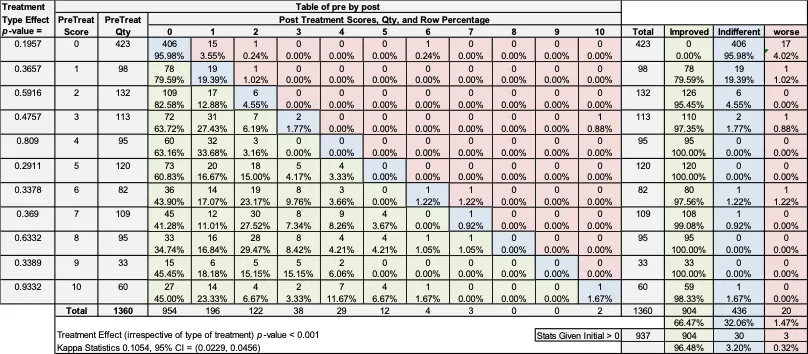
Score improvements after IV treatment.
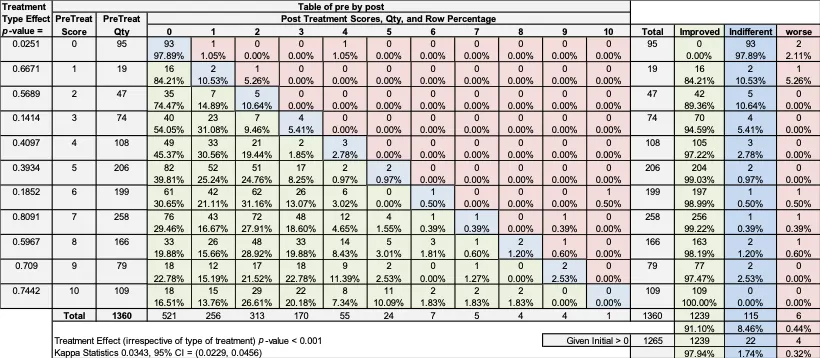
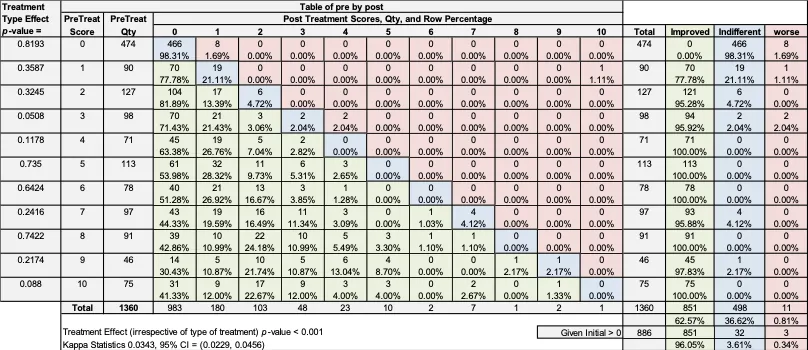
Patients self-scored overall hangover, nausea and headache on a 0–10 scale, before and after treatment.
These are the clinic’s own figures: an in-house retrospective study of a randomized set of 1,000+ patients, by Jason Burke, M.D. and Darien Cohen, Ph.D. It is not a peer-reviewed publication. Its stated limitations: no negative control, and no control for the amount or type of alcohol consumed.
02 — How it was run
Methods, as published.
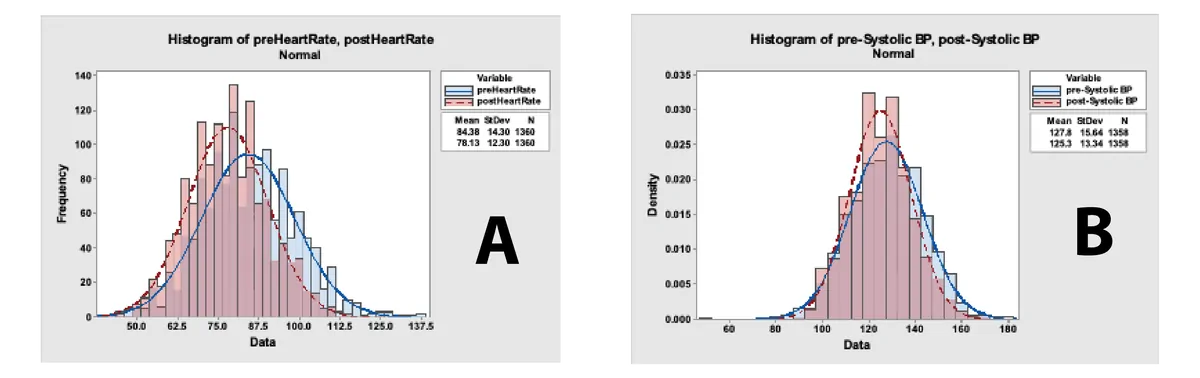
- Blood pressure and heart rate measured before and after IV treatment
- Patients self-scored overall hangover, nausea and headache on a 0–10 scale
- Drawn from “a randomized set of 1,000+ patients”
- Analysis performed by Dr. Cohen “and an independent statistician”
- Significance threshold: p < 0.05
03 — What it reports
Findings, in the authors’ words.
- About 80% of patients arrived at a self-score of 10, “epic”, and dropped to 3 or less within 45 minutes
- The effect was “most consistent and pronounced in treatment 2 (Salvation)”
- Mean systolic blood pressure and heart rate were lower after treatment
- Clinic-wide, the practice reports tens of thousands treated, with 99% reporting “a significant reduction in their hangover symptoms”
“The first report of the statistically relevant reduction of hangover symptoms.”The authors, on their study
04 — Exhibits
The study’s own figure and tables.
Reproduced from the clinic’s study page.
05 — Protocols recorded in the study
Four treatments, one retired.
- 01Discontinued
Redemption
750 ml, for mild hangovers.
- 02Current cure
Salvation
750 ml, for moderate hangovers.
- 03Current cure
Rapture
1000 ml, for severe hangovers; adds an injectable B vitamin and oxygen.
- 04Current cure
Eternity
IV hydration. The newest cure, not part of the study.